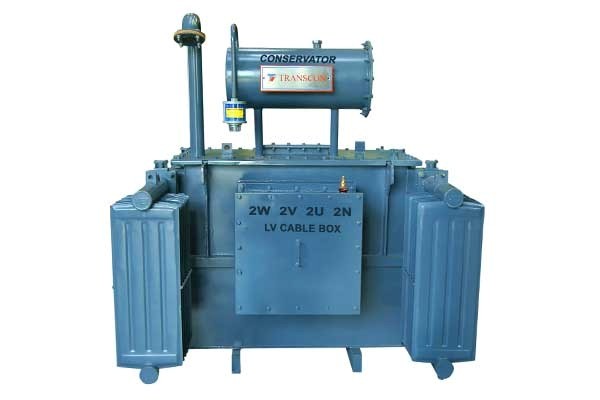
Electricity is very important in our daily life right from the time we wake up and even while we are sleeping. For homes, businesses, industries and commercial establishments, a reliable power distribution system is very important. Transformers are one of the most important components of this system as they help in controlling the voltage levels and safe distribution of electrical power.
CSP stands for Completely Self-Protected Transformers. It is a type of distribution transformer. These transformers are very popular as they are equipped with built-in safety and protection features. The transformers are designed to provide reliable power distribution with minimum requirement for additional external protective equipment.
WHAT ARE CSP TRANSFORMERS?
A CSP (Completely Self Protected) transformer is a distribution transformer with protective devices to protect it from typical electrical faults and abnormal operating conditions.
In case of standard transformers, it requires separate external equipment for protecting its components during operation. This work is a tedious and complex task which can also increase cost considerably. However, a CSP transformer comes readily with safety components, making it easier for users to maintain it.
Some important features of the CSP transformers are:
- Overload conditions built-in protection
- Protection against internal short circuit
- Lightning and surge protection by means of suitable protective means
- Voltage change reliable for distribution networks
- Less need for outside protective equipment
- Ideal for a multitude of residential and commercial applications
WORKING PRINCIPLE OF CSP TRANSFORMERS
CSP transformers are based on the same fundamental principle of electromagnetic induction that drives conventional transformers. They transfer electrical energy from one circuit to another using a magnetic field. They do not change the frequency of the electricity.
The CSP transformer usually has two windings, primary and secondary. These windings are wrapped around a magnetic core.
This is how the working process works:
- Power Supply to the Primary Winding: The primary winding receives electricity where AC current is generated, which in turn, creates a magnetic field around the transformer core.
- Electromagnetic Induction: Once the magnetic field is created, the secondary winding generates electricity through the electromagnetic induction process.
- Voltage Transformation: The transformer adjusts the voltage as required which depends on the number of turns on the primary and secondary windings.
- Power Distribution: The changed electrical power is delivered to the connected distribution lines, buildings, homes and other electrical loads.
- Automatic Protection: Internal protective devices sense certain abnormal electrical conditions. These devices disconnect the transformer from the supply or limit the effect of the fault depending on the type of protection provided if a fault occurs.
This complete protection system makes CSP transformers a feasible solution for distribution networks.
APPLICATIONS OF CSP TRANSFORMERS IN POWER DISTRIBUTION
CSP transformers are used in many applications where reliable distribution of electrical power is needed. Built in protection features make them suitable for several distribution applications.
- Residential Areas: CSP transformers are used in residential distribution networks to supply electricity to houses, apartments and housing societies. They help in converting the voltage to lower levels to suit daily electrical appliances like freezer, lights, and other home appliances.
- Commercial Buildings: This includes shopping complexes, schools, hotels, and offices which requires a steady power supply. A CSP transformer will ensure that the voltage needed to keep these establishments going are always stable.
- Rural Electrification: Rural areas can be difficult to maintain in terms of electrical distribution infrastructure due to long distances and limited access to maintenance facilities. CSP transformers have protective features built into them that can simplify distribution arrangements in suitable rural applications.
- Small Industrial Units: Stable electrical power is required for the machinery and equipment used in small manufacturing facilities, workshops and processing units. A CSP transformer will ensure that it matches the required voltage and capacity rating of the production site in question.
- Agricultural Applications: Farming operations use electricity to operate irrigation pumps, water supply systems and other farm equipment. CSP transformers can be used to support the agricultural power distribution networks providing the required voltage to these applications.
- Utility Distribution Networks: Electricity distribution companies use distribution transformers to deliver electricity to the end users from the distribution network. CSP transformers can be used in appropriate utility distribution systems to enhance protection and operational convenience.
ADVANTAGES OF CSP TRANSFORMERS
There are many advantages to electrical distribution systems in selecting a CSP transformer.
Here are important advantages:
- Improved Safety: Internal safety devices guard the transformer against typical electrical faults.
- Less external equipment: Some additional protection arrangements might not be necessary.
- Operability: Integrated protection ensures reliable transformer operation.
- Lower Installation Complexity: Combining protection components inside the transformer can simplify installation.
- Equipment Protection: Protective devices help in reducing the chance of damage from overloads and electrical faults.
- Various Applications: They can be used in residential, commercial, agricultural and selected industrial distribution systems.
FACTORS TO CONSIDER WHEN CHOOSING A CSP TRANSFORMER
The selection of the right CSP transformer is critical to ensure safe and efficient power distribution. A few things to think about before buying or installing one include:
- Transformer Capacity
- Voltage Requirements
- Protection Features
- Installation Location
- Efficiency
- Quality Standards
- Manufacturer Reliability
SUMMARY
A CSP transformer is not just an equipment; it is a critical part of the electrical infrastructure in any modern power distribution system. What sets it apart is its ability to protect its working components in case of any fault. This can be a major advantage that saves both lives and money.
For it to be reliable, you must pick the right transformer for the task – considering its capacity, voltage requirements, intended application, and quality standards. The CSP transformers are still a good option to develop a safe and efficient power distribution infrastructure as the demand for the reliable electricity increases.